
CIO Lens: The silent allocator
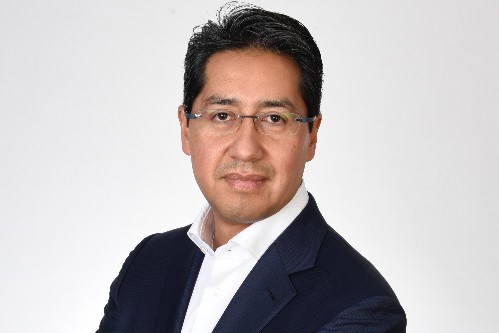

By Dr. Carlos Mejia, Chief Investment Officer, Rothschild & Co
The US dollar does not appear on our asset allocation chart, yet it influences every aspect. Its movements quietly redistribute risk and return across portfolios, often without explicit recognition. A stronger dollar can tighten financial conditions, weigh on emerging market assets, and compress commodity prices, while a weaker dollar can boost global liquidity, and support risk assets.
As long-term investors, we maintain a neutral stance on currencies, including the dollar, recognising that directional moves are difficult to predict and often sudden. Still, we monitor it closely, because its strength or weakness reshapes the relative attractiveness of exposures across geographies and asset classes. In this sense, the dollar acts as a silent allocator: not a security we explicitly hold, but a force that subtly redistributes risk and return throughout the portfolio.
Credibility at risk
In the first half of this year, the US dollar fell around 12% against other currencies, the steepest decline in more than 50 years. While economic fundamentals contribute to the dollar's depreciation, it is important not to underestimate the role of speculative market dynamics in amplifying currency movements.
After more than a year of holding rates steady, in September 2025 the Federal Reserve initiated its first rate cut in response to labour market weakness. Slowing job growth, upward revisions to unemployment, and softer wage dynamics have shifted the Fed’s focus toward supporting employment, even as inflation remains stubbornly above target.
Policy uncertainty, amplified by the open comments from the current US administration towards monetary policy, seems to be gradually diminishing the dollar’s appeal as a safe haven.
Several factors are raising questions about its long-term stability and role in global portfolios:
- The Fed’s independence is under scrutiny due to political interventions, including attempts to dismiss Fed governors.
- Rate cuts have weakened the dollar’s yield advantage, prompting global investors to reduce dollar exposure.
- Policy inconsistency - especially around tariffs, fiscal spending, and data transparency - is undermining confidence in US economic stewardship.
Some banks anticipate further depreciation of the greenback through 2026, citing converging global growth and narrowing interest rate differentials. While we acknowledge the potential for short-term softness, we consider a sustained decline unlikely, unless structural shifts in US policy or investor confidence materially alter the dollar’s role as a reserve currency.
The sentiment effect
Broader factors such as interest rates, inflation, political stability and trade policies shape the value of a currency over time. In the short term, however, investor behaviour and psychology also matter. When investors act on emotion, speculation, or short-term trends, currencies can move in ways that do not always reflect underlying economic reality. For the dollar, its ups and downs are as much about psychology as economics.
The dollar is also seeing its safe-haven status questioned. This shift has led foreign investors to protect themselves by adding currency hedges to US investments, actions, that can further weaken the dollar. At the same time, currency markets are increasingly influenced by fast automated trading systems that respond to price moves rather than economic fundamentals, making swings in the dollar more unpredictable.
At the portfolio level, this environment has given rise to double hedging, where investors attempt to protect against currency risk in more than one way. While this may appear prudent, it can cancel out useful exposures, raise costs, and obscure real risks in a portfolio. That is why it is important to ensure currency protection is well thought through, and not simply layered on top without a clear strategy.
When evaluating portfolio performance, it is worth asking: which has the greater impact - hedging currency risk or simply bearing it? With current hedging costs elevated, it may now be more efficient to tolerate some currency exposure rather than fully hedge it. This shift invites a reassessment of how we manage currency risk, balancing protection with cost-effectiveness.
De-dollarisation? Not yet.
The US dollar faces growing challenges on the global stage, but there is little evidence to suggest a full-scale de-dollarisation is imminent. Geopolitical tensions such as US sanctions and tariff policies have prompted some countries to explore alternatives. Policy uncertainty, driven by mixed signals from US leadership and concerns over fiscal stability, is also undermining investor confidence.
Both emerging markets and global investors are taking steps to reduce their exposure to dollar risk: emerging markets by increasing gold reserves, and investors by adding currency hedges to US holdings. Meanwhile, central banks are increasing their gold reserves, diversifying away from the US dollar, reinforcing a broader shift that could exert continued downward pressure. Still, the dollar remains without a viable alternative for now: the US continues to offer deep, liquid, and relatively safe financial markets - advantages no other economy can currently match.
The euro is often mentioned as a potential rival to the dollar, but its market remains too fragmented to serve as a truly appealing alternative. The eurozone is made up of multiple countries with differing fiscal policies, political priorities, and economic conditions, making it harder to present a unified front. Political uncertainty in key economies such as France, Spain, and the Netherlands further undermines investor confidence. Additionally, Europe’s economic structure leans heavily towards traditional industries, while much of the world’s innovation, particularly in technology and finance, continues to be driven by the United States. These factors limit the euro’s ability to challenge the dollar’s dominance in global markets.
Another currency gaining attention is the yuan, but it faces several structural hurdles that limit its global appeal. It lacks the market depth needed for currency stability, and China’s strict capital controls make it difficult to convert or repatriate yuan-denominated assets. The currency’s pricing is not fully market-driven, with the People’s Bank of China (PBOC) setting daily reference rates. Despite China’s economic size, the yuan represents only a small share of global reserves and trade finance. Regulatory unpredictability and geopolitical tensions further add to investor caution.
The US remains central to global investment
The US continues to be a global hub for innovation, driven by its entrepreneurial mindset, openness to risk, and strong ecosystem for scaling new ideas. This dynamic is deeply embedded in its economic culture, and there are no signs of it changing anytime soon.
At the portfolio level, it remains extremely difficult to move away from US dollar– denominated assets if the goal is to invest in scalable innovation, deep capital markets, and companies with global reach and liquidity. The structural advantages of the US, from its regulatory framework to its financial infrastructure, are hard to replicate elsewhere, even when currency risk is a concern.
The dollar may not be a position we actively manage, but its influence is constant, shaping portfolio outcomes, investor sentiment, and global capital flows. As longterm investors, our role is not to chase currency moves, but to remain alert to their impact. We must interpret signals, assess risks, and ensure our strategies stay aligned with the broader investment landscape.
In a world of shifting signals and momentum, the silent allocator reminds us to stay grounded in fundamentals, to question assumptions, and to manage exposures with clarity and purpose. It is not about predicting the dollar’s next move; it is about understanding how its presence continues to shape the path forward.
Our insights, your investment journey
This article is produced by Rothschild & Co Bank AG, Zollikerstrasse 181, 8034 Zurich, for information and marketing purposes only. It does not constitute a personal recommendation, an advice, an offer or an invitation to buy or sell securities or any other banking or investment product. Nothing in this article constitutes legal, accounting or tax advice. Although the information and data herein are obtained from sources believed to be reliable, no representation or warranty, expressed or implied, is or will be made and save in the case of fraud, no responsibility or liability is or will be accepted by Rothschild & Co Bank AG as to or in relation to the fairness, accuracy or completeness of this document or the information forming the basis of this article or for any reliance placed on this article by any person whatsoever.
In particular, no representation or warranty is given as to the achievement or reasonableness of any future projections, targets, estimates or forecasts contained in this articlet. Furthermore, all opinions and data used in this articlet are subject to change without prior notice. Law or other regulation may restrict the distribution of this article in certain jurisdictions. Accordingly, recipients of this article should inform themselves about and observe all applicable legal and regulatory requirements. Neither this article nor any copy thereof may be sent to or taken into the United States or distributed in the United States or to a US person. Rothschild & Co Bank AG is authorised and regulated by the Swiss Financial Market Supervisory Authority FINMA.
Read more articles
-

Rothschild & Co impulsa su crecimiento en España con la incorporación de Álvaro Santos en el área de Wealth Management
Press releases
El nuevo nombramiento refuerza las capacidades locales y supone un paso más en la expansión del negocio de banca privada en España.
-

Geopolitics Blog: Christmas Season: Reasons to be cheerful
Insights
In our latest geopolitical blog, Mark Sedwill, Chair of Geopolitical Advisory at Rothschild & Co offers his reflections on six strategic reasons for Christmas confidence.
-

Five key questions for a carefree retirement
Corporate
Planning for retirement early helps secure your finances and gives you the freedom to enjoy travel, hobbies or family time. These key questions can guide you